|
How was life like before e-commerce? Thanks to it, goods and services are available worldwide with a single click. Also, it's a means to expand the market for many companies in a globalised world. However, shipping items from one corner of the planet to another requires assuring these arrive in perfect conditions. For this, proper packaging is a must. But, does it mean these goods must be covered with layers and layers of protecting material? Here we share this real life example. 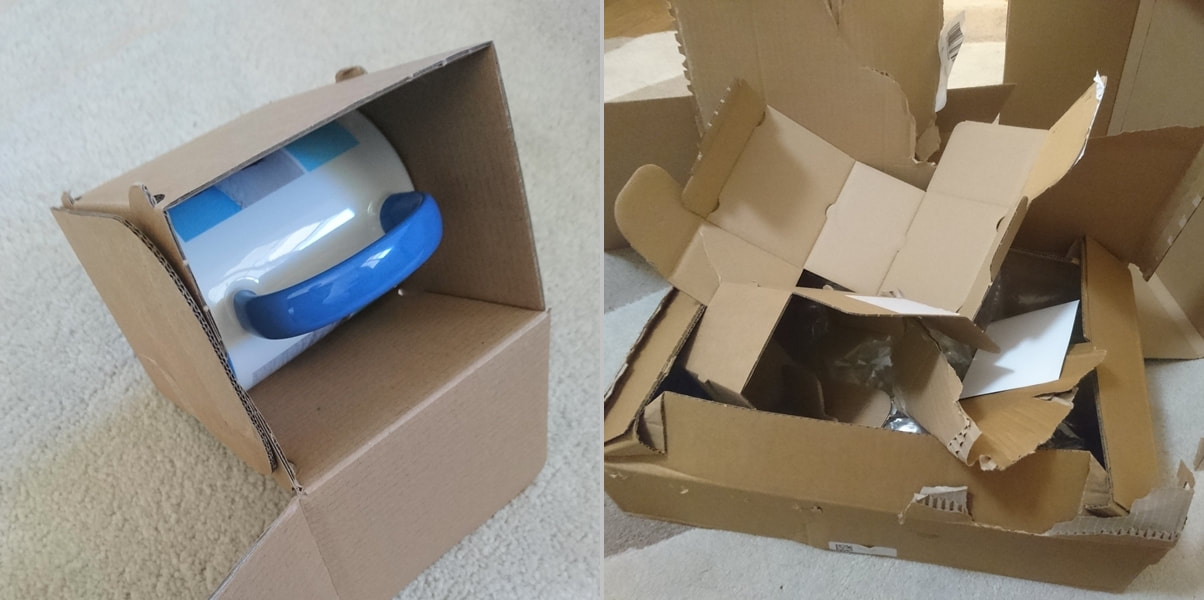 The image on the left shows one of the two cups bought by e-commerce. Each of these where packaged in a small cardboard box, enough to protect it during transportation (maybe also wrapped with some old crumpled newspapers to be on the safe side?).
Surprisingly, these boxes where likewise put into a much bigger cardboard box, with LDPE bubble plastic to fill the vast remaining empty space inside. So, in the picture on the right, you have the total amount of cardboard and plastic used to protect the two cups... isn't it crazy? Okay: both cardboard and LDPE are recyclable materials. Yet, some important questions remain open:
The fact is that, to ship around 960cm3 of fragile items, they used a 18.816cm3 volume. In other words: the packaging is about 20 times larger than the volume of the items! If we also analyse the weight added by useless protection materials, the situation becomes even more outrageous. Efficient use of transported volume is crucial for a sustainable transport system. Be that by ship, by plane, by train, by road, there is energy and fuel involved. A bad management of wrapping and packaging materials, leads to the release of emissions just to transport air in containers. In this case, 95% of the volume is air. It's worth to say that this is not an exclusive feature of e-commerce. We can daily find overpackaged items anywhere (meat, fish, veggies, biscuits, cleaning products, clothing, tools and DIY materials... even wrappings and containers!) Eco-tips to not contribute to this craziness:
Can you come up with something else? Would you like to share your experience with us? Feel free to comment!
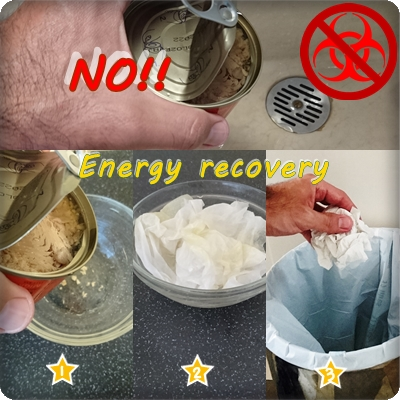
As we well know, oil and water don't mix with each other, and the density of cooking oil is lower than that of water. Thus, the oil poured can create a film on top of sewage water, hindering its oxygenation. In an atmosphere lacking oxygen, there are microorganisms able to transform the organic matter dissolved into methane, which has a Global Warming potential 23 times higher than CO2! Once arrived to the sewage water treatment plant, the oil is already dispersed into drops which reduces the efficiency of the first treatment processes. In the end, it may oblige to add specific oil removal stages, excessive for a simple domestic sewage water plant. Later in the process, it can hamper digestion of organic matter during the biological treatment, as it disturbs regular bacterial development. As a result, it increases costs and may give rise to higher taxes for compensation (so called "externalities"). Finally, it can get stuck to your pipes, creating a crust, and trapping or retaining particles, dirt, and waste, resulting in bad smells and poor hygienic conditions for your home. So, what to do with this oil if we don't want to use it? Eco-tip: Oil is a problem for a water treatment system. However, it is also a great biofuel. Thus, why not taking advantage of it through energy recovery?
Cooking tip (extra): Put the oil in a salad or use it for a marinate (especially if it's olive oil). It will give to your dishes a delicious fishy taste. 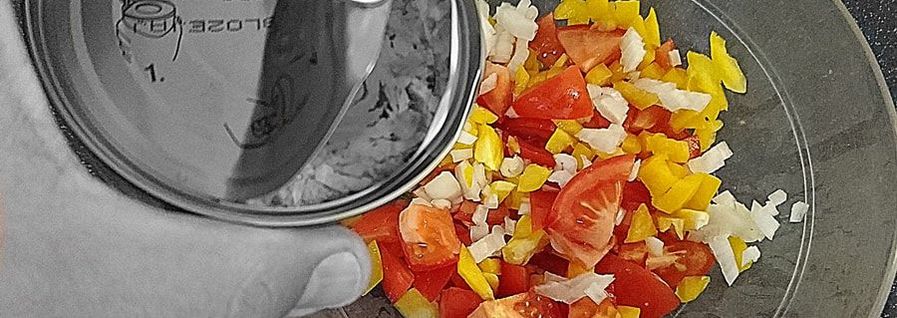 A sandwich maker can make your life so easy...if it works. Despite it's a rather simple device, mine failed. So I had two problems: hunger and a device to fix. I guessed it had to be the rheostat. Either way, I had to open it to unveil the guts. 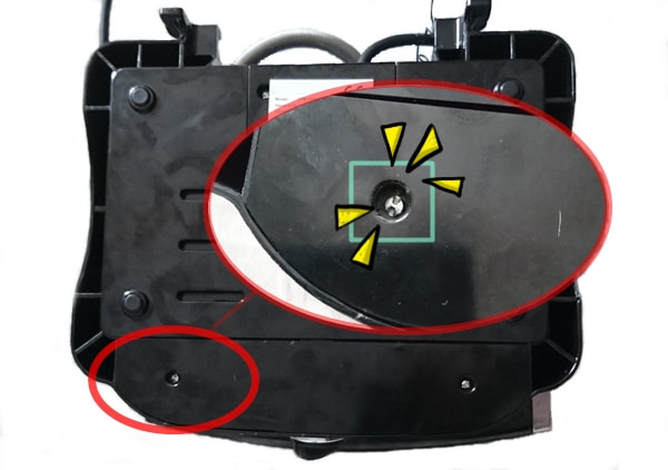 I got my nothing-especial blue-collar toolbox, picked the set of screwdrivers and...Tataaaa! I found the screw in the image. I tried and I tried but it was impossible to unscrew with a regular tool. Three options were possible:
Eco-tip: a well ecodesigned product will always use standardised components to ease repairing, disassembly, assembly, remanufacturing. This way we just replace single elements and not entire products. PS: no sandwich makers where harmed in this post. I sold it to someone able to fix it, and bought a secondhand one. Long life to Circular Economy! Each country (even regions or municipalities) try to find the way to ease waste collection to recycle certain materials or to optimise energy recovery through waste incineration. There are well-intentioned people all around the World eager to recycle. But, is waste sorted properly? What do we do when a waste product combines more than one material? As an example, I found this broken hanger. The body is made of polypropylene (PP) and the hook of steel. Where should I throw away this hanger? plastics? metals? incineration? 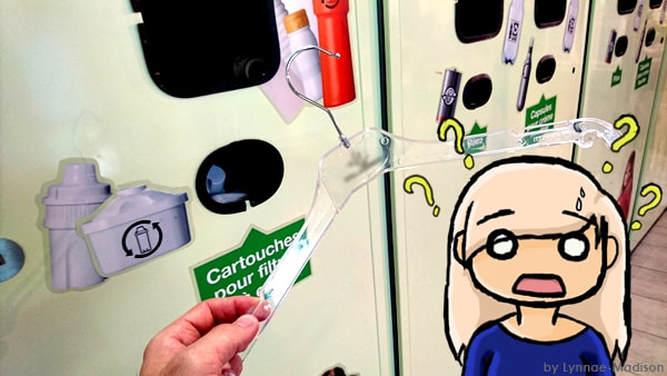 A short background description. In Switzerland, generally, disposal points differentiate PET, aluminium (cans), glass, batteries, light-bulbs, non PET plastics (HDPE, PP), paper. Less commons are organic waste, cardboard, domestic metals (tins), clothing, and such. Such wide classification is kind of confusing, isn't it? But when facing confusion, Swiss citizens use a Joker: a white taxed bag where they can put whatever.
We all will agree: waste should be sorted before disposal. But most people don't have 8-10 different rubbish bins at home. Later, at the collection point, is far too late. Besides, lack of knowledge about materials and their recovery process make collection and recycling less efficient. I myself found the disposal of a simple hanger rather difficult. For Circular Economy and ecodesign engineering, material recovery or recycling (or alternatively energy recovery) are essential. Here we give you some general tips to sort your waste (regardless your country) when the products include several materials. Eco-tip:
|

 RSS Feed



|
Design of products
|
|